Être: Dagmar Cyrulla

Lennox St. Gallery is thrilled to announce 'Etre', an exhibition of recent paintings and sculpture by the internationally renowned artist Dagmar Cyrulla.
Please join us for the exhibition opening on the 11th of April from 2-4pm.
Follow link to request a preview catalogue
Dagmar Cyrulla Private lives
It has become an article of faith among art historians that Monet’s two great paintings of 1863 – Le Déjeuner sur l’herbe and Olympia - owe their iconoclastic reputations not to the nudity of the women portrayed, but to the way these women look directly at the viewer. In both pictures the same model, Victorine Meurent, meets our gaze with supreme self-confidence, as if sitting naked on the grass with two fully clothed gents or reclining on a queenly divan wearing only a string necklace and a pair of slippers, were the most natural things in the world.
Meurent is not a surpassing beauty, but she seems completely at ease inside her skin, declining the conventional signs of shame with which artists embellished the female form. The salon nudes of Bouguereau or Cabanel coyly avert their eyes while displaying their bodies to the viewer, offering themselves to the male gaze that devours their pale flesh. If not unaware of the viewer, they have the good manners and tact not to make him self-conscious of his voyeurism.
Cabanel’s Venus, famously said by Émile Zola to be made of pink and white marzipan, distends herself full-length upon the waves, one hand thrown up against her closed eyes. Her curvy, hairless body is offered to the viewer in the manner of a sumptuous feast arranged on a plate. Gérôme was even more obliging in his paintings of Arab or Roman slave markets. In his Sale of a Slave Girl in Rome (1884), a woman stands on stage in full frontal nudity, her arm covering her face in a familiar gesture of humiliation.
We look upon such paintings today as brazen, male sexual fantasies, but this is not how they were received by Parisian audiences during the Belle Époque. The lascivious pictures of Gérôme were the height of respectability, while Manet or Degas’s portrayals of women were decried as pornographic. If Manet’s offence was to have nudes meet the viewer’s gaze head-on, Degas was criticised for showing imperfect bodies in prosaic settings – women with rolls of fat lowering themselves into tubs, or the scrawny, “semi-idiot” Little Dancer.
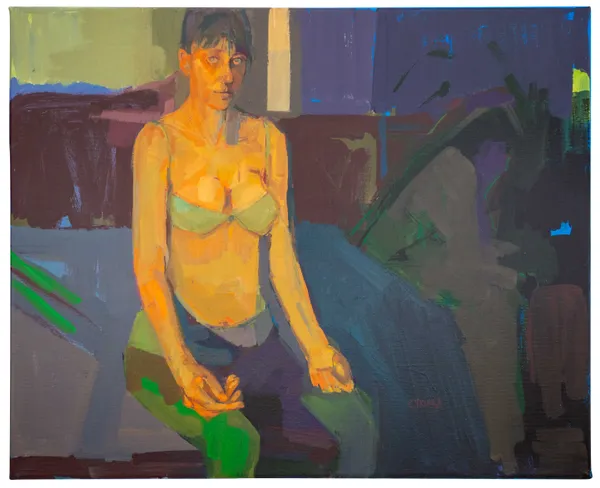
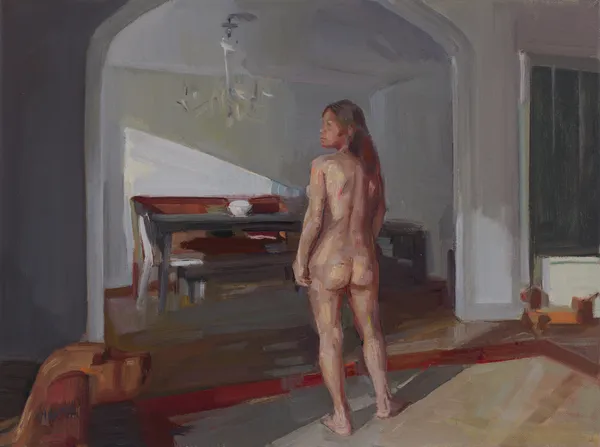
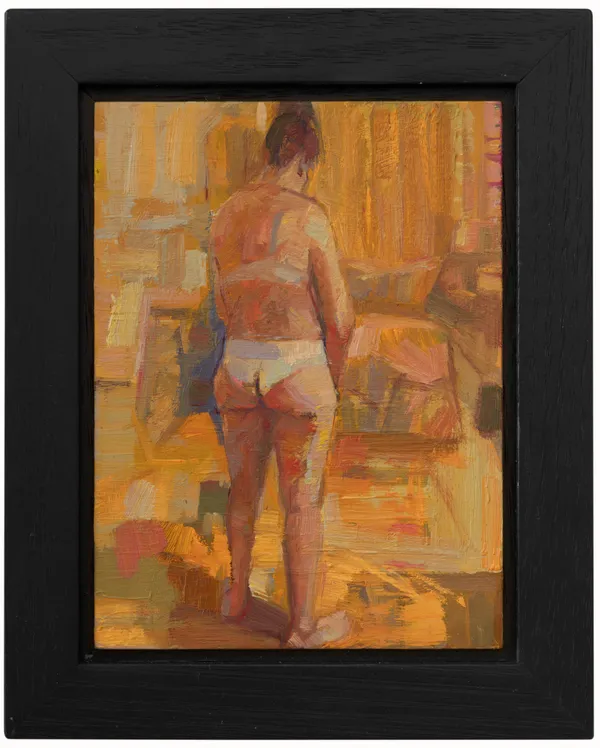
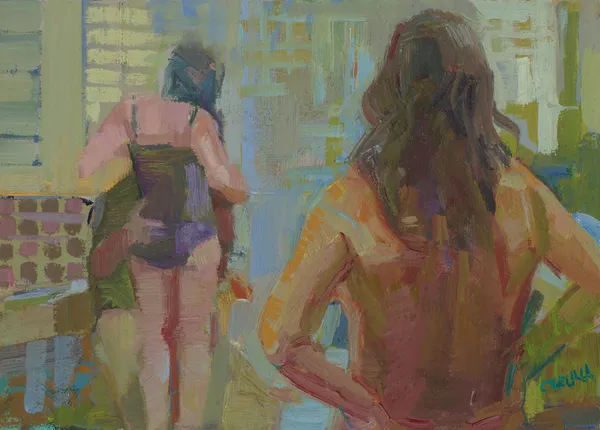
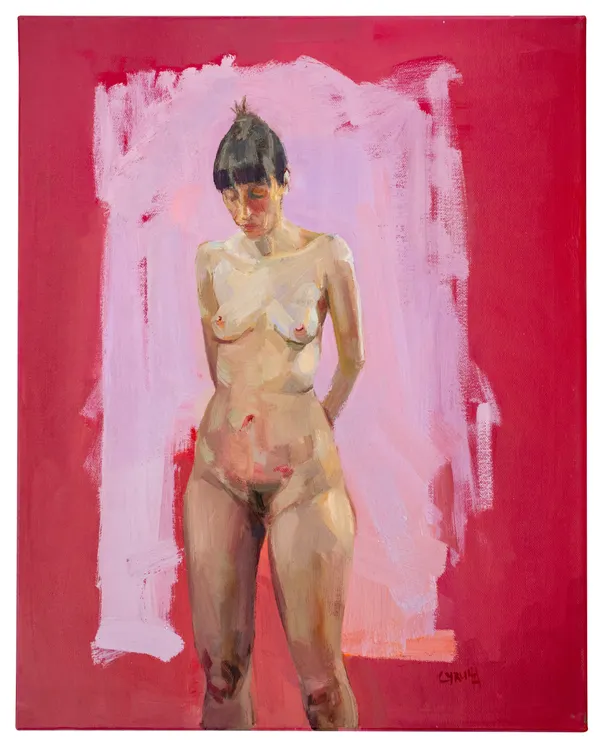
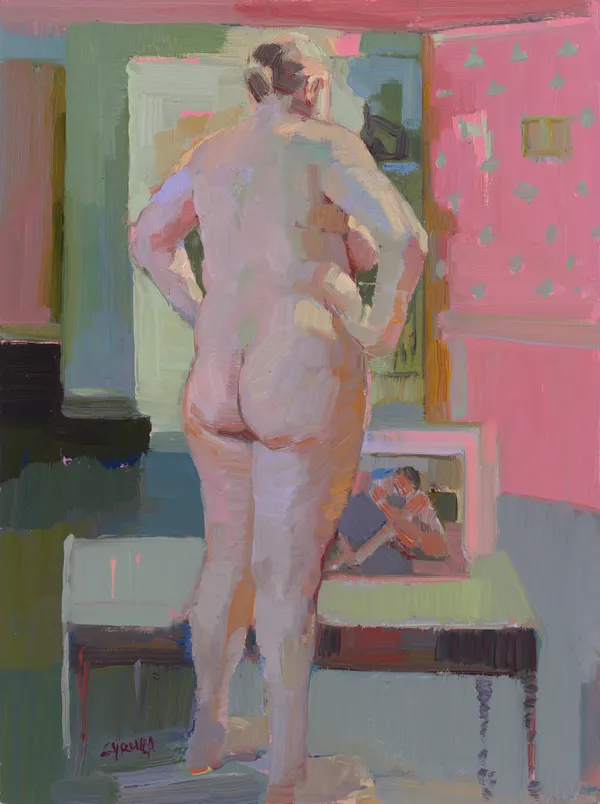
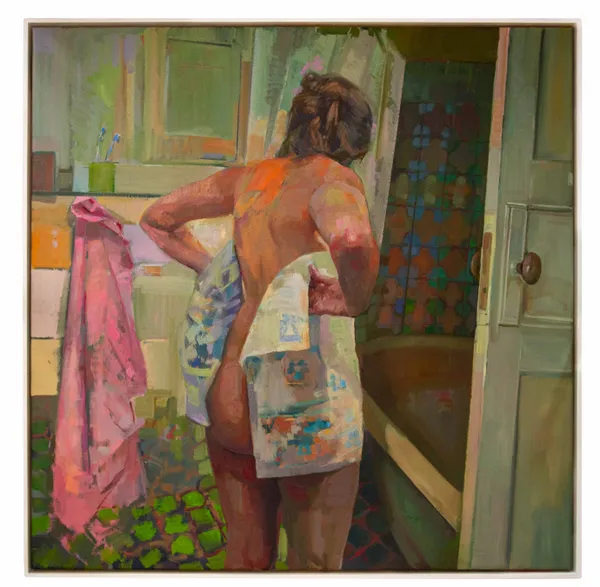
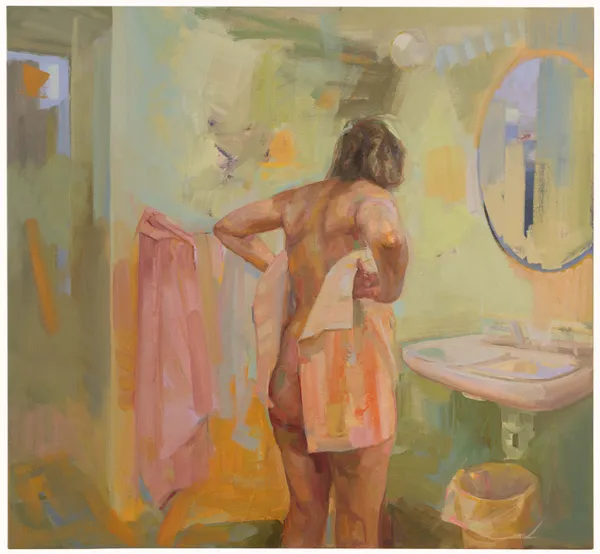
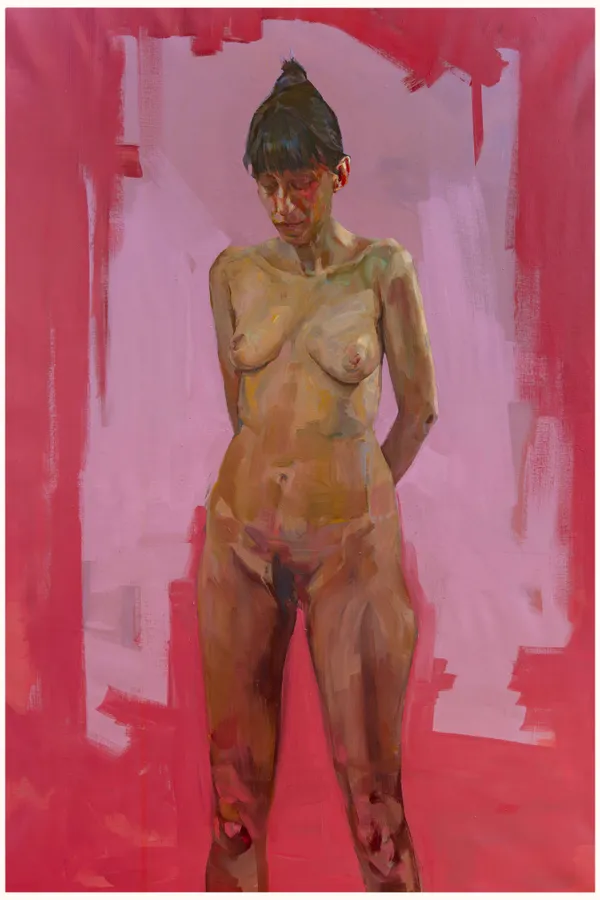
Such attitudes may be unthinkable today, but they form the background for Dagmar Cyrulla’s paintings, which show non-idealised female bodies, a little too thick or thin, captured in private moments. The French critics scandalised by Manet or Degas believed artists should work from classical ideals of beauty. This meant that a perfectly proportioned slave girl displayed like goods in a shop window was seen as an acceptable addition to the drawing room, but it was inconceivable how anyone could feel the same affection for Degas’s “ugly”, “deformed” women getting into tubs.
Cyrulla is fascinated by the private nature of Degas’s bathers, who seem oblivious to the viewer’s presence. Taking her lead from the French master, she creates an ambiguous relationship between the viewer and the subject. If we imagine ourselves in the bathroom with her nudes or women in their underwear, it implies an intimate form of acquaintance. If we see ourselves as a kind of invisible spy, we can only be voyeurs. Either way, it asks the viewer: “What are you looking at?”, or “What are you looking for?”
When one thinks of historical constructions of feminine beauty – from the corsets of the 18th century to the cosmetic surgeries of the present – it’s a story of the body being shaped and moulded into unnatural forms. These aestheticised bodies have been created for public display, usually along lines determined by men. To show a woman by herself in the bathroom or bedroom, free from the strictures that determine her social persona, is to reveal her as an interiorised being, not a collection of surface effects - as a subject rather than an object.
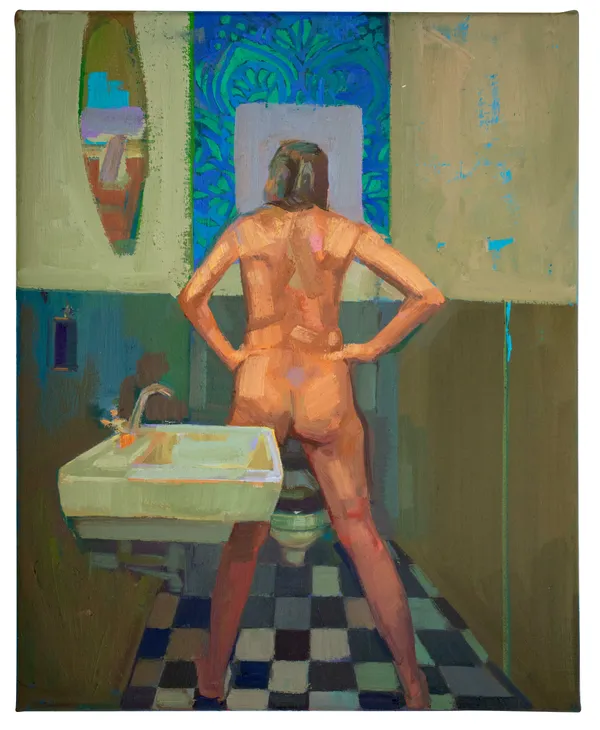
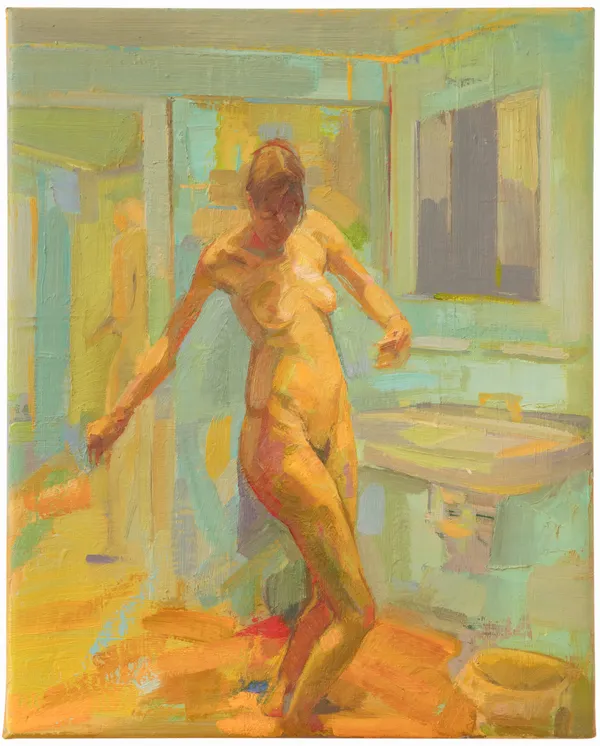
Cyrulla captures moments of perfect freedom, when her figures can ‘be themselves’ without worrying about whether anyone is assessing their attractions. In one painting, a naked woman is dancing by herself in the bathroom. In another, the subject stands – hands on hips – taking stock of her own bulk. Another woman lifts her arms above her head while gazing at an empty bed, exposing her naked torso and crotch. In the strangest of all, a nude stands with her back to us in a toilet cubicle, adopting the standard pose of the male who positions himself in front of the bowl. These images are Degas-esque in their intimacy and the way they make us feel we are intruding on some private reverie.
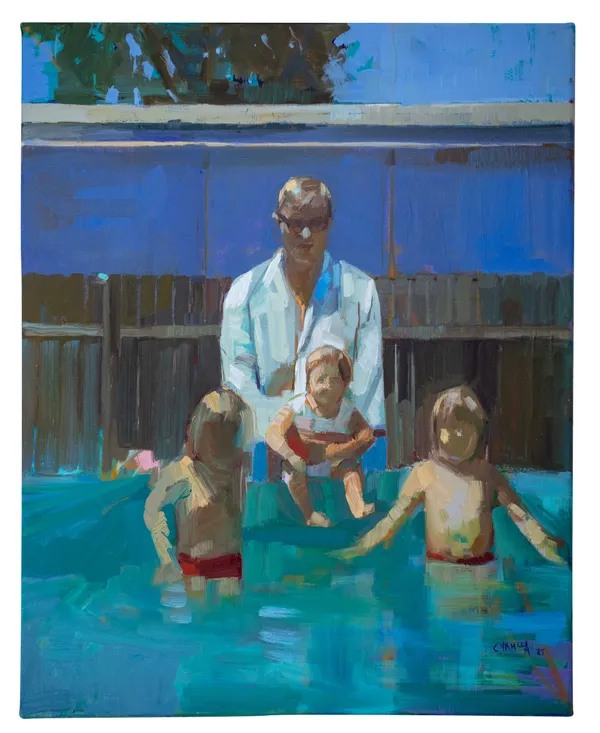
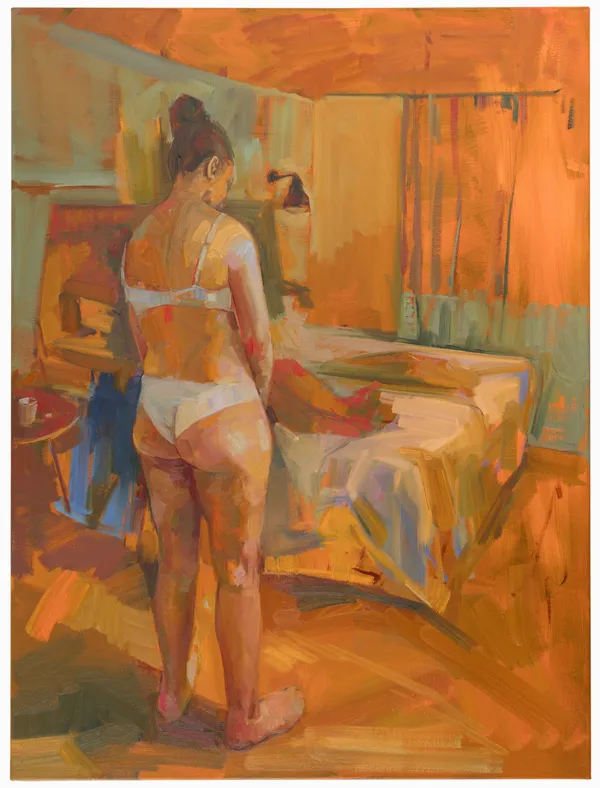
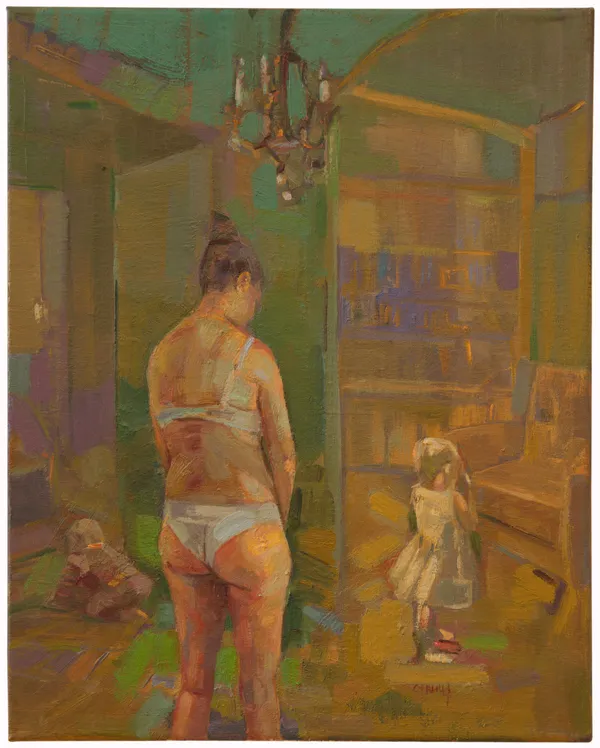
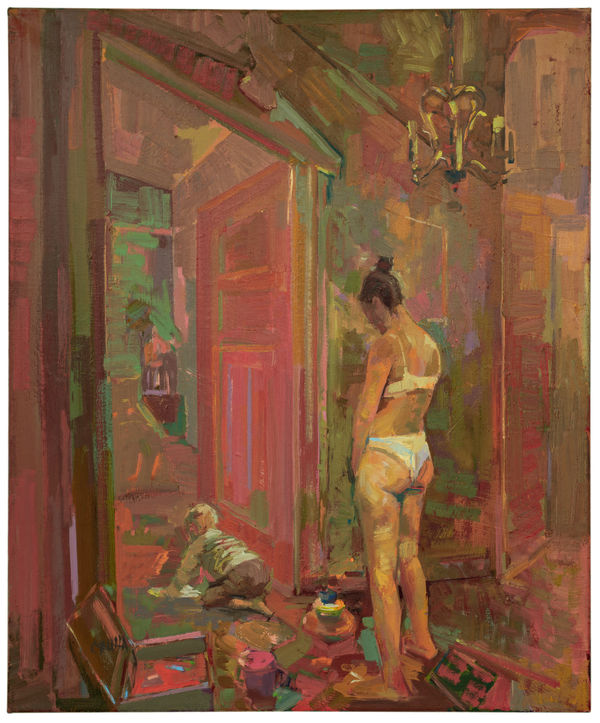
There is almost always a hint of sexual tension in Cyrulla’s paintings, as with a woman in bra and knickers facing a bed on which we spy an anonymous pair of legs. With her head bowed and hands clasped in front, she appears in a submissive pose, as if awaiting instructions. We meet the same figure again, in the same pose and the same undies, as she watches children playing on the floor, submitting to motherhood as a form of self-sacrifice. One thinks briefly of Gérôme’s slaves, their faces averted from the viewer.
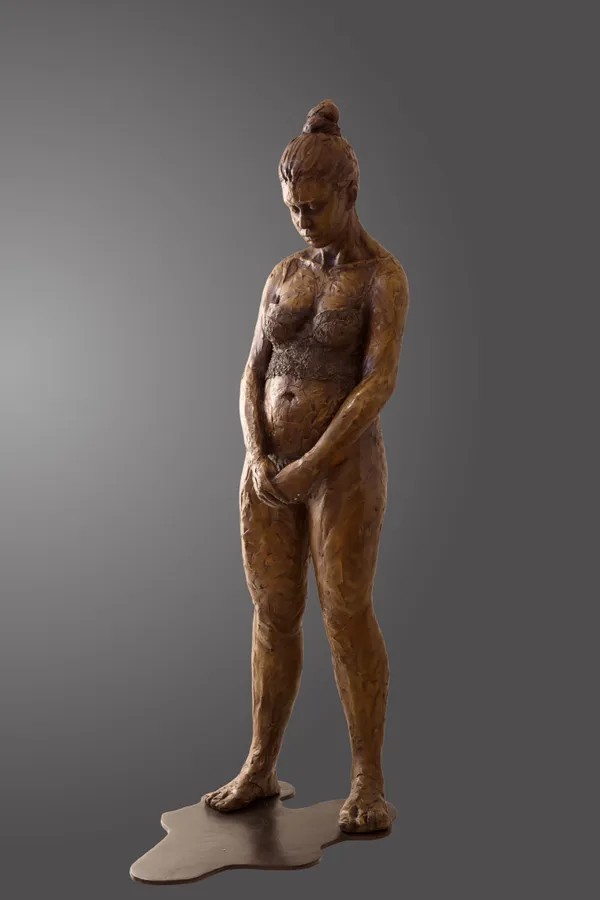
Cyrulla features the same figure in three dimensions, as a bronze sculpture. Removed from a painted interior, isolated in space, the woman takes on a more meditative dimension. In her pose and attitude there is the beginning of a story, but we’ll have to imagine the rest for ourselves.
Along with these investigations into feminine psychology, motherhood, or male-female relations, Cyrulla includes a raft of art historical references. A woman in a room with a dog has the same lonely, self-absorbed quality as a figure in an Edward Hopper painting. A nude standing by the bath, drying herself with a blue-and-gold striped towel, is “after Rembrandt”, presumably after Woman Bathing in a Stream (c. 1654), in the National Gallery, London. It’s a strikingly informal image that seems to anticipate Degas’s bathers, although Rembrandt set his subject in a numinous landscape with a glimpse of discarded, rich fabrics. It’s a far cry from a Parisian apartment or Cyrulla’s suburban bathroom.
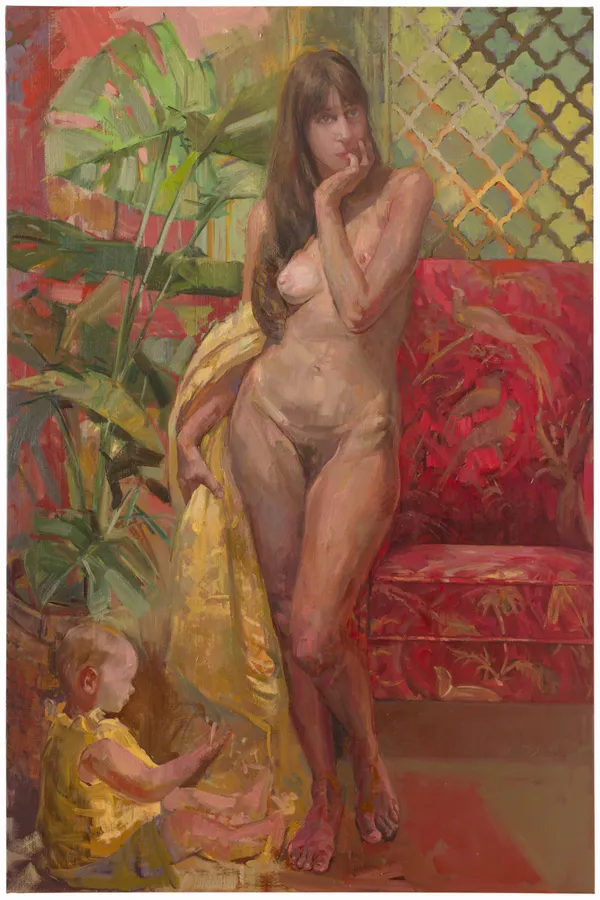
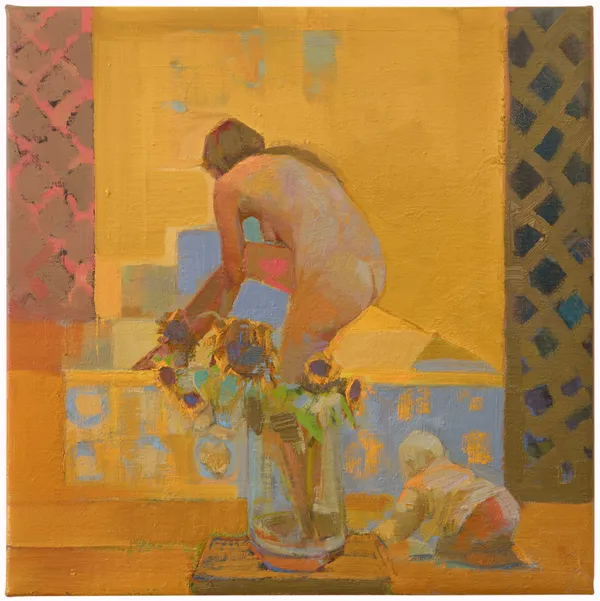
A model standing naked in front of an elaborately patterned couch and a tropical plant could be a distant relation of the figure in Ingres’s The Source (1856), or a close cousin of Lefebvre’s Chloe (1875), still attracting admirers at Young and Jackson’s in Melbourne. Cyrulla has emphasised the ambiguity of the image by having the model clasp a hand to her chin in perplexity. She seems to be wondering how she came to be standing stark naked amidst all this exotic décor, a baby playing at her feet. By this stage, we’ve come to see the baby as an ironic gesture, reining in the freedom a woman might feel in her bathroom or bedroom. It may be possible to momentarily escape the male gaze or the public display, but the child is an ever-present reminder of the responsibilities that keep a woman tethered to the earth.
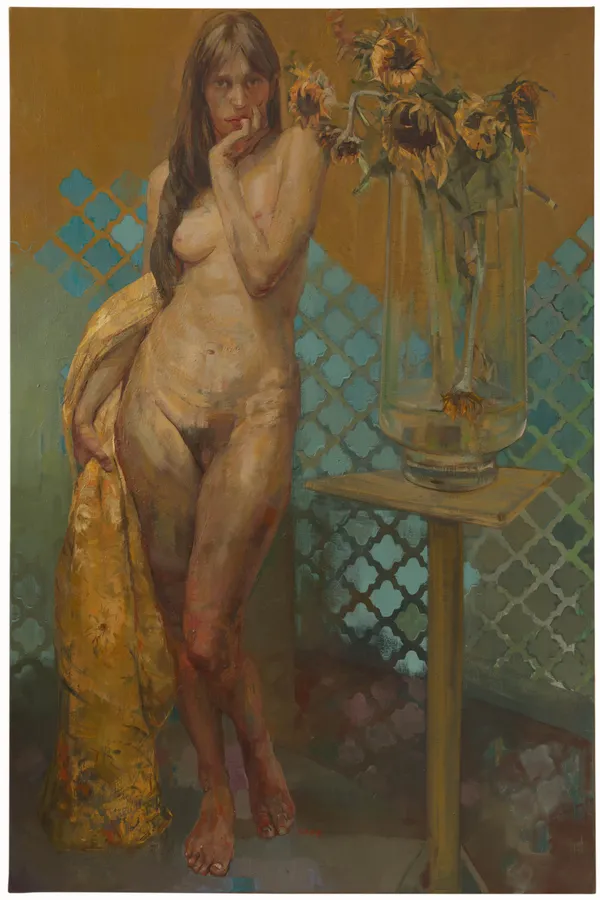
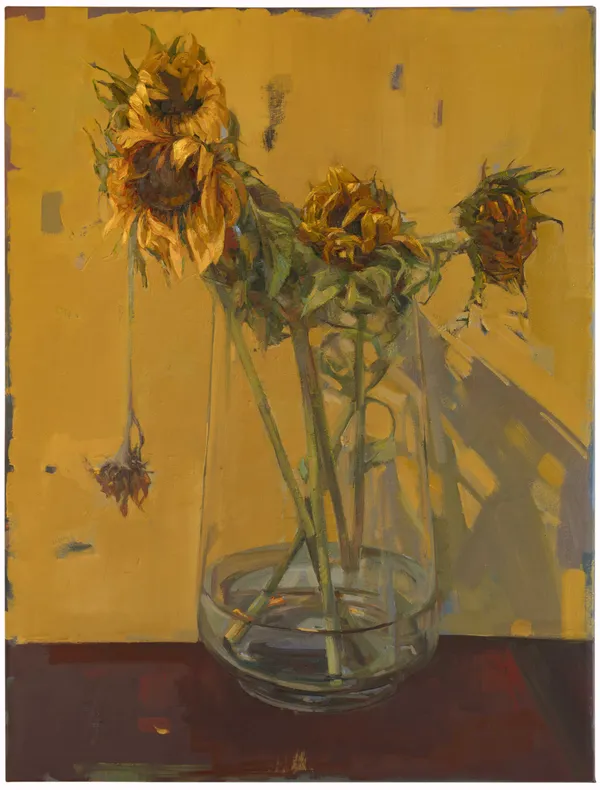
In another painting, the model stands alongside a vase in which a group of sunflowers has wilted. The same motif recurs in two still lifes, with the dead flowers making an unmistakable reference to Van Gogh’s famous Sunflowers. Although Van Gogh returned to this theme on many occasions, his best-known versions are among the most joyous images in all of art history. They tell us a great deal about the optimism that continually rose up to transcend the material miseries of the artist’s life. In her withered sunflowers, Cyrulla shows she is not quite ready to embrace so much unalloyed joy. In problematic times for art and humanity, she accepts that beauty is fighting an uphill battle to assert itself.
Everywhere in this show, we see an artist who deeply admires the art of the past but knows that it can’t be repeated in the present. We may no longer expect a nude to gaze modestly at the floor, but we’ve grown impatient with subtlety and complexity. Yet even in this era of diminishing attention spans, Cyrulla believes it’s important that a painting not give up all its secrets at first glance. She wants us to reflect on her images in the same way she has reflected on those of Degas, Manet, Van Gogh or Rembrandt, accepting that there is no master key that unlocks the meaning of a work, but many different keyholes through which we feel compelled to look.
John McDonald writes about art, cinema & politics at the site, ‘Everything the artworld doesn’t want you to know’ (everythingthe.com)